Best Product Seeding Tools & Apps in 2026: Top Tools for Influencer Campaigns
Discover the best product seeding tools and apps for 2026. Compare top platforms for influencer campaigns, automation, and ROI tracking. Find the perfect tool for your brand.
Product seeding, or sending free products to creators in exchange for authentic content, has become one of the highest-ROI strategies in influencer marketing.
Brands earn an average of $5.78 for every dollar invested, and that number climbs to $20 when campaigns are well-managed.
The catch? At any meaningful scale, manual coordination becomes a liability. Missed posts, untracked shipments, lost usage rights, and zero visibility into what's actually driving sales all add up fast.
The right product seeding software fixes that. This guide covers the best tools available in 2026, what separates them, and how to choose the one that fits your brand.
What to Look for in Product Seeding Tools
Before comparing platforms, it helps to know what actually matters. The tools that deliver results for growing brands share a few common traits.
Automated content capture is non-negotiable. If you're manually searching for every post a creator makes about your brand, you're already losing. The best platforms track tagged and untagged mentions automatically, including Instagram Stories that disappear after 24 hours.
Usage rights management matters the moment you want to run ads. A creator's organic post doesn't automatically give you permission to use it in paid campaigns. Look for tools that make rights requests and approvals fast and documented.
Campaign and seeding workflows should cover the full loop: creator outreach, product selection, shipment tracking, and post-delivery follow-up. Platforms that handle all of this in one place save hours of operational overhead per week.
Analytics and attribution separate high-performing programs from guesswork. You need to know which creators and which content are actually driving sales, not just which posts got the most likes.
Integration with your existing stack (Meta Ads, TikTok Shop, email/SMS tools) determines how much manual data transfer you'll have to do. The less, the better.
Pricing model and scalability matter a lot. Some tools charge per creator, which gets expensive fast. Others use flat monthly pricing, which is more predictable as your program grows.
Top Product Seeding Tools Reviewed
Refunnel
Best for: DTC e-commerce brands running product seeding, affiliate, and UGC campaigns on Instagram and TikTok.

Key features:
- Automated Instagram and TikTok content capture (including Stories)
- Product seeding campaigns with branded creator landing pages
- 1-click usage rights and whitelisting for Meta Ads
- TikTok Shop affiliate tracking with performance leaderboards
- UGC reward campaigns with automated creator payouts
- Shoppable feed for website
Refunnel is built specifically for the workflow that product seeding demands: find creators, ship products, track what they post, secure rights, and repurpose the best content. It's the only platform that combines social listening, product seeding campaigns, TikTok Shop affiliate tracking, UGC rights management, and whitelisting in one system. All without per-creator fees.
The platform's social listening captures every Instagram and TikTok mention automatically, including Stories. When you find a creator whose content is performing, one-click whitelisting lets you get usage rights and push that content to Meta Ads without navigating Facebook Business Manager separately.
For seeding specifically, Refunnel's branded landing pages let creators select products directly and place orders themselves, which eliminates the back-and-forth of confirming sizes, colors, and addresses. Tiered reward structures based on content performance give creators an incentive to keep posting, and give you a clear metric for who to prioritize in future campaigns.
Real brands have used this to move fast at scale. Frostbuddy used Refunnel's system to generate 100M+ impressions and $100K in GMV from 1,700 UGC videos on a $7,000 budget. And High Camp Flask grew with Refunnel from 6–12 creator partnerships per year to dozens per month, producing 300+ videos and 7.5 million impressions.
Pricing: Starter at $499/month, with the Growth and Enterprise with custom pricing. And no per-creator charges.
Pros: All-in-one for the full seeding lifecycle; TikTok Shop integration is unique in the market; flat pricing scales well; no creator registration required to participate in campaigns
Cons: Focused on Instagram and TikTok, not the right fit for YouTube-heavy programs
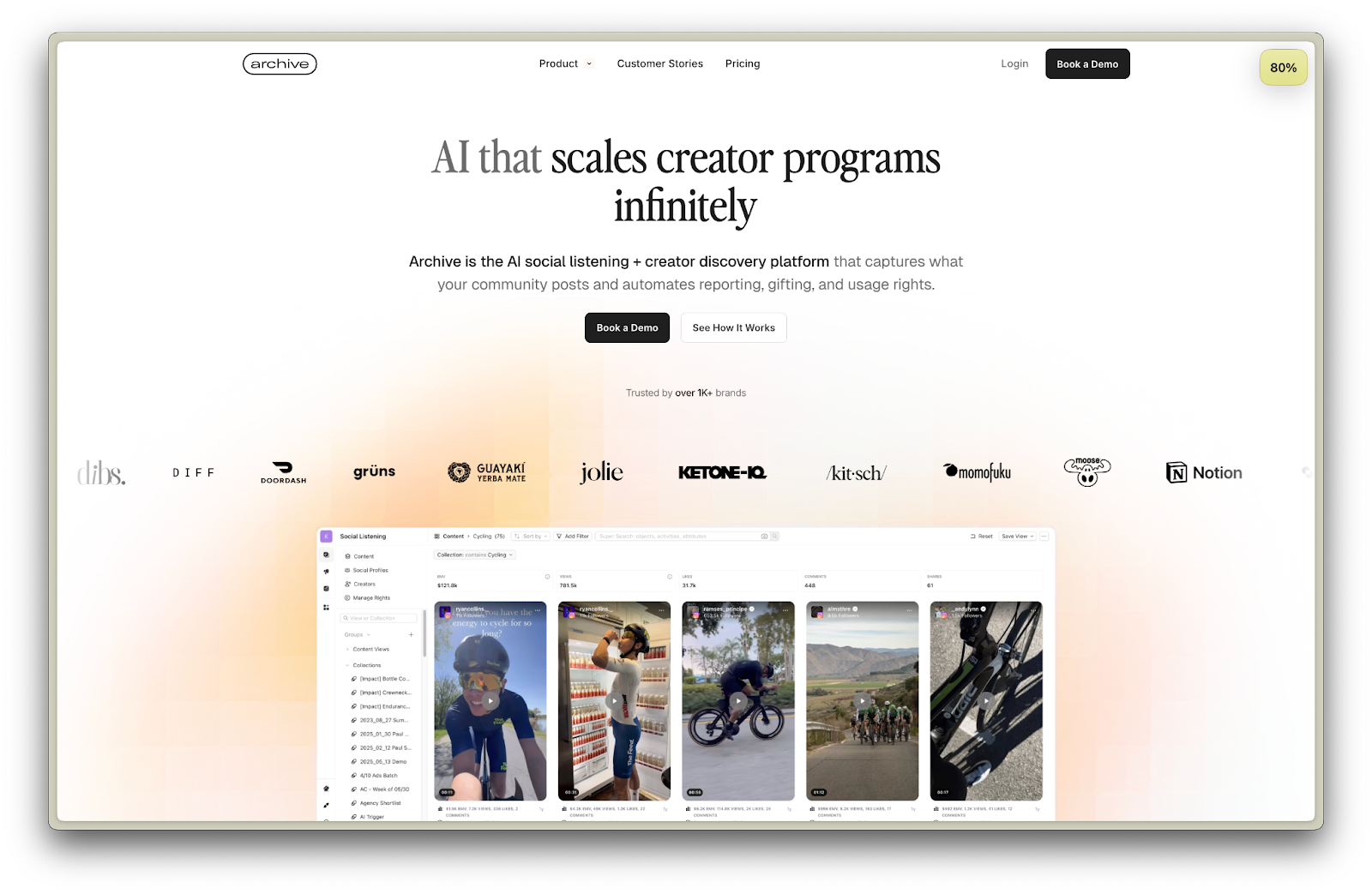
Archive
Best for: Brands that need comprehensive UGC capture across Instagram, TikTok, and YouTube, with strong campaign reporting
Key features:
- Automated content capture across Instagram, TikTok, YouTube
- AI video social listening that detects brand mentions without tags
- Automated product seeding with creator order management
- Brand safety vetting using AI review of historic creator content
- Creator search with competitor influencer data
- Campaign reporting dashboards with EMV tracking
Archive is a creator marketing platform built around one core problem: brands miss too much content. Their social listening technology claims to capture 400% more content than competing platforms, including Stories, YouTube posts, and video content where your brand is mentioned but not directly tagged.
The platform's AI tools go beyond basic tracking. Archive Radar detects brand mentions in video and audio, not just text tags. Smart AI Fields auto-tag posts with product names, campaign associations, sentiment, and custom fields you define, turning raw UGC into searchable, organized data. The Creator Leaderboard ranks everyone who tags your brand by performance so you know who to re-engage.
For product seeding, Archive automates gifting workflows with one-click order confirmation, tracks seeding results in a live dashboard, and integrates with Shopify for direct sales attribution. The platform serves brands including Allbirds, Momofuku, and DoorDash.
Pricing: Custom pricing. You need to contact Archive for a demo. Aimed at SMB through enterprise.
Pros: Best-in-class content capture volume, strong AI for brand safety vetting, good for brands needing YouTube coverage.
Cons: Mainly for social listening only, pricing lacks transparency, heavier feature set means longer onboarding.
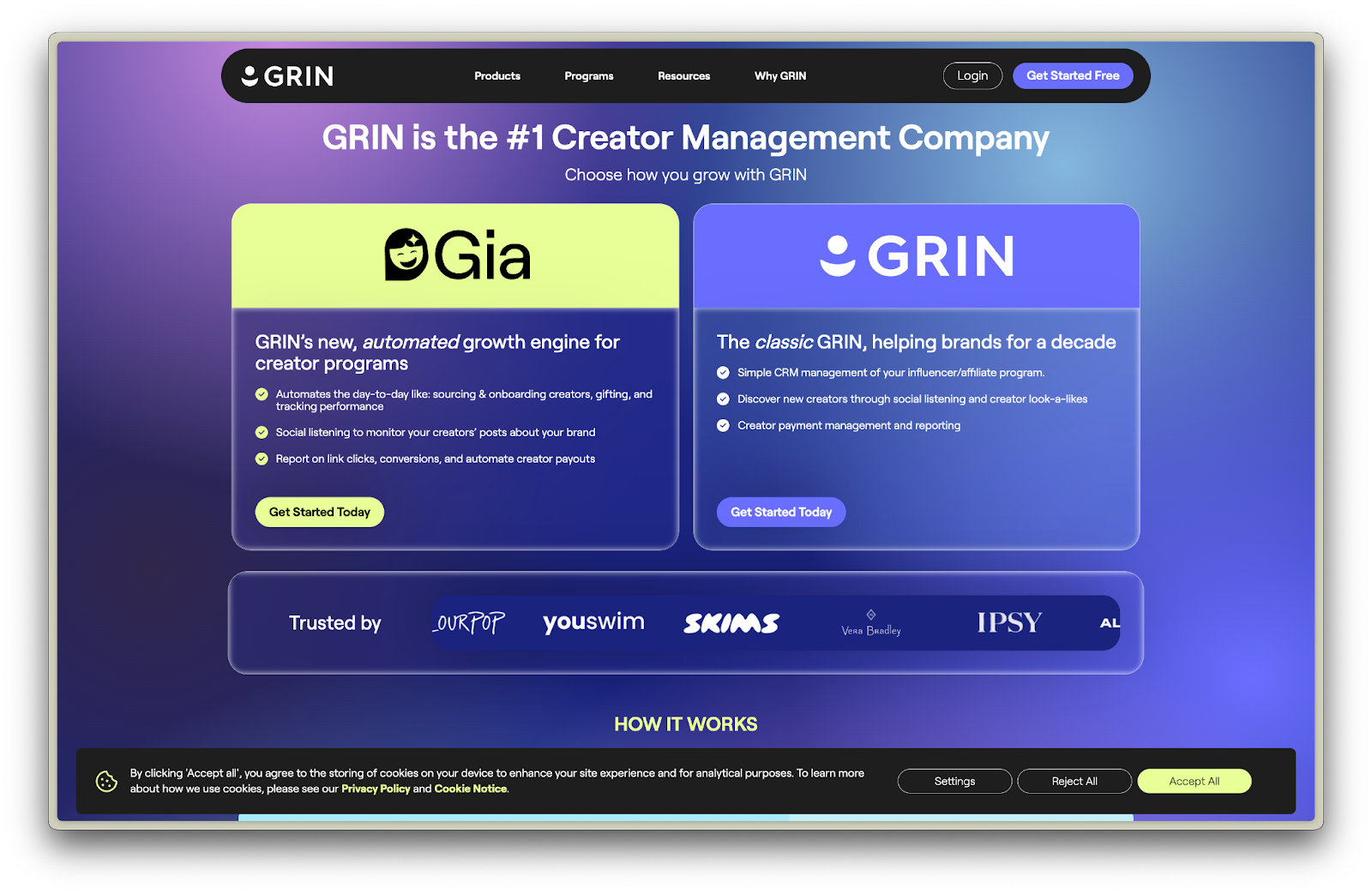
GRIN
Best for: Mid-to-large DTC brands running high-volume influencer and affiliate programs with Shopify at the center.
Key features:
- Native Shopify, WooCommerce, and Magento integration
- 190M+ creator database with AI-powered discovery
- Automated product seeding via e-commerce workflows
- Affiliate and discount code tracking
- Content and UGC library with rights management
- GIA AI assistant for outreach automation
GRIN is one of the most established creator management platforms in the market. Its deep Shopify integration is the primary differentiator. Brands can sync product catalogs, automate gifting, manage discount codes and affiliate links, and track influencer-driven revenue all within one platform. A Chrome extension lets you pull creator data in real-time while browsing Instagram.
GRIN's creator database spans 190M+ profiles across Instagram, TikTok, and YouTube. The GIA AI assistant automates discovery and can draft outreach emails based on creator profile data. Campaign management covers contracts, content approvals, and payments from a centralized dashboard.
The platform works well for brands that need an influencer CRM with strong e-commerce attribution. However, it's not designed for the kind of organic UGC capture that Refunnel or Archive prioritize, you won't automatically catch everything creators post about your brand.
Pricing: Free 30-day trial. Lite at $399/month, Essentials at $699/month, Growth at $1,149/month, Complete at $1,799/month.
Pros: Best Shopify integration in the market; strong influencer discovery; end-to-end campaign and payment management
Cons: High cost and annual contracts make it prohibitive for smaller brands, steep learning curve, mixed reviews around customer support
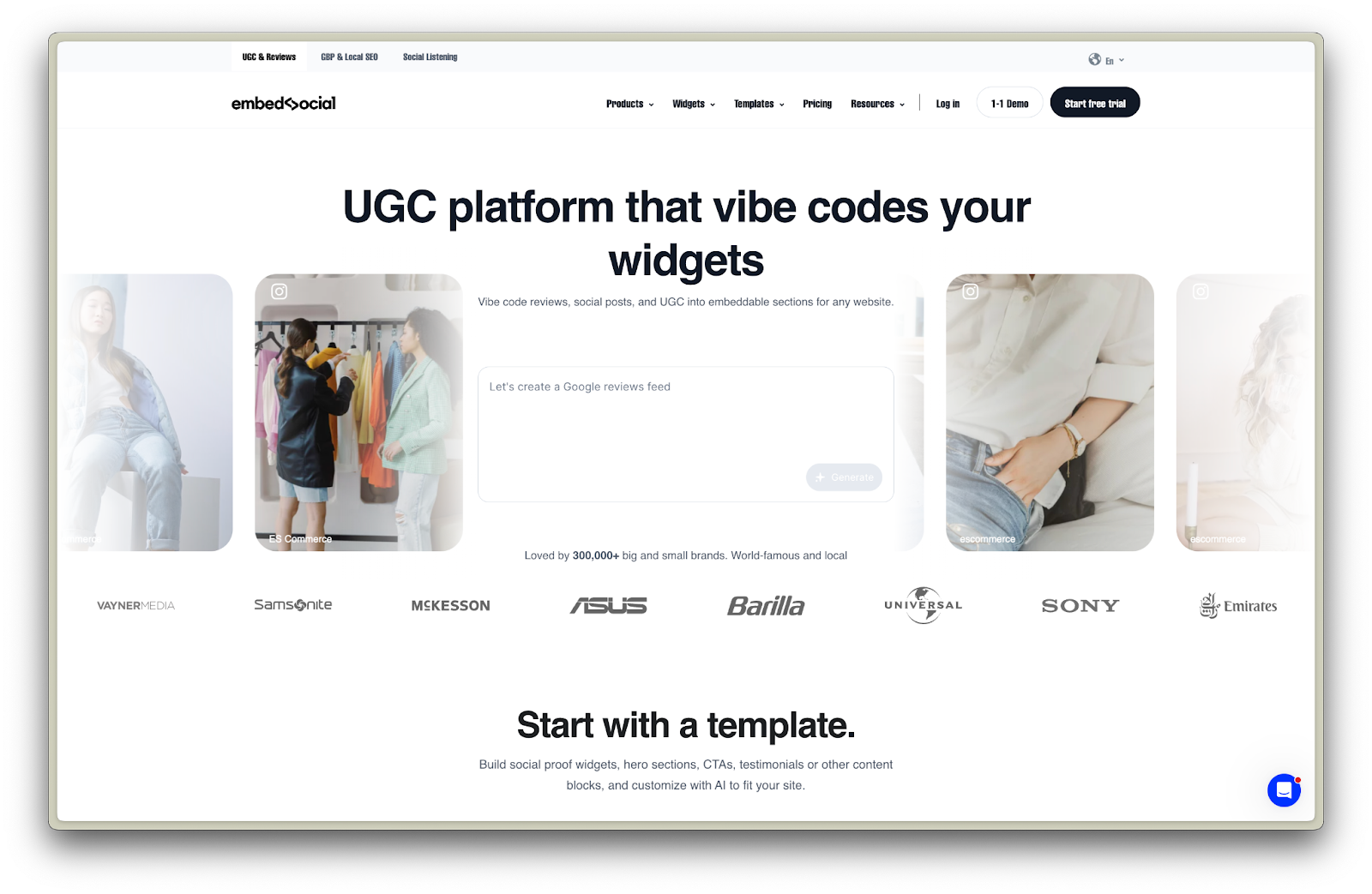
EmbedSocial
Best for: Multi-location brands, franchises, and agencies managing UGC and reviews across many channels
Key features:
- Content collection from 20+ social platforms
- 140+ embeddable widget templates
- Automated rights management with permission tracking
- Shoppable UGC galleries with product tagging
- AI-powered review response
- Multi-location/multi-account management dashboard
EmbedSocial is an all-in-one UGC platform focused on helping brands collect, display, and manage user-generated content across their marketing channels. With particular strength in multi-location and multi-client environments. It aggregates content from 20+ social platforms and provides 140+ pre-built widget templates for embedding social proof across websites, emails, and digital displays.
For product seeding applications, EmbedSocial streamlines collection and rights management. Automated permission requests can go out at scale, and the platform tracks approvals with documented timestamps. Shoppable UGC widgets let you connect creator content directly to product pages, turning social proof into a conversion tool.
The multi-location dashboard is a standout feature for franchise brands or agencies managing multiple accounts. So everything sits in one interface rather than requiring separate logins per brand.
Pricing: They have a Free plan. Paid tiers start with the Pro at $29/month, Pro Plus at $49, and Premium at $99
Pros: Strong multi-location support, broad platform coverage, good for brands wanting to embed UGC across websites and email.
Cons: Not built specifically for product seeding campaigns, limited TikTok Shop or affiliate tracking, weaker on influencer outreach and discovery.
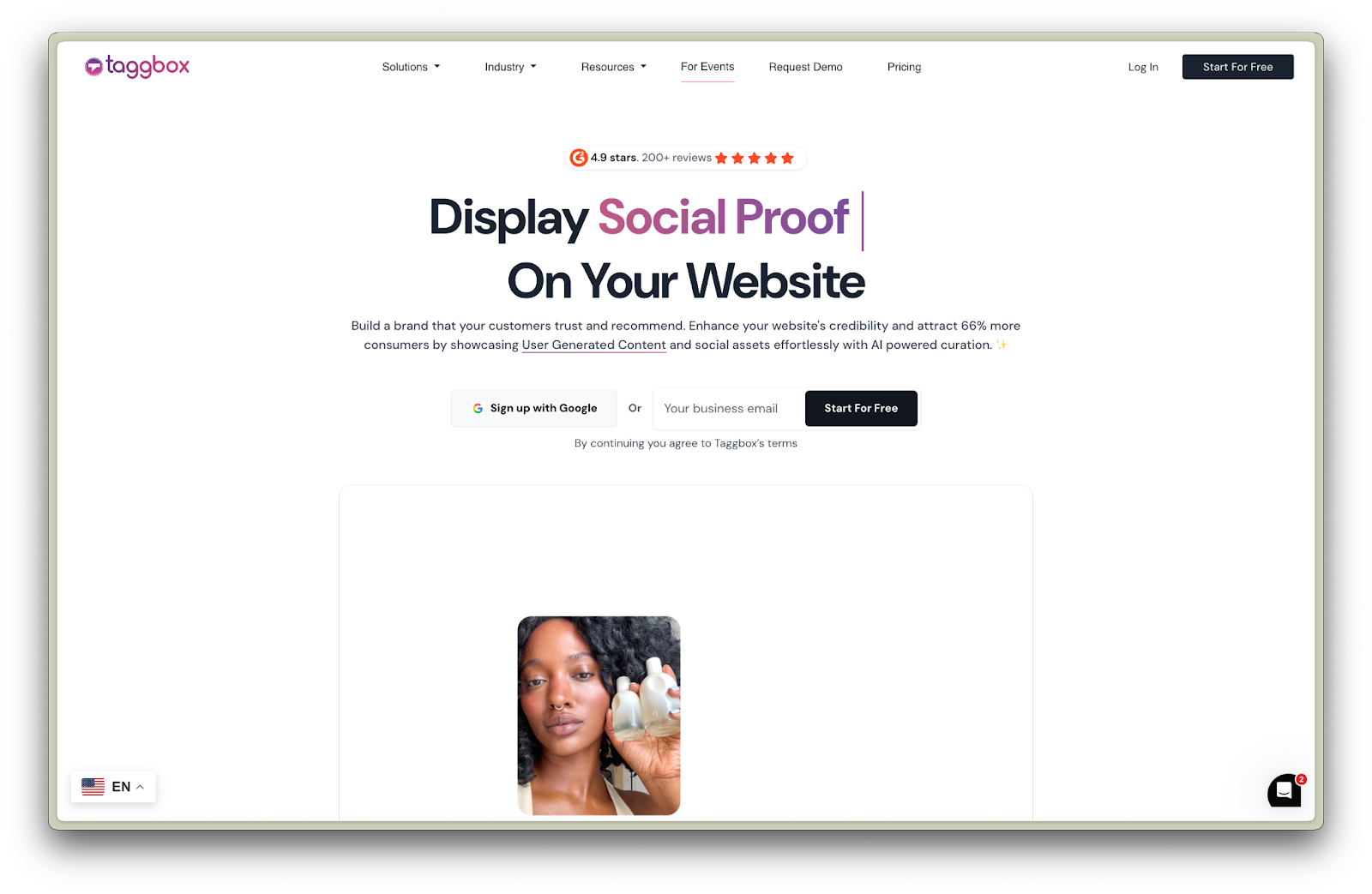
Taggbox
Best for: Brands needing a versatile UGC aggregator for website display, events, and digital screens
Key features:
- UGC collection from 20+ platforms
- Customizable widget and display templates (140+)
- Shoppable gallery with product tagging
- Rights management with permission documentation
- Analytics for engagement and conversion tracking
- Integration with Shopify, WordPress, and other CMS platforms
Taggbox collects user-generated content from 20+ social platforms and lets brands curate, display, and analyze it across multiple channels; including websites, live event walls, digital signage, email, and more. The platform covers text reviews, photos, videos, and social posts with a single interface.
For product seeding, Taggbox provides rights management tools that let you request and document permission to use UGC. The shoppable gallery feature links customer content to product pages with built-in checkout options. Analytics track engagement, conversions, and reach per piece of content.
Taggbox's key strength is its versatility and the breadth of content types it handles — it's not limited to video or social and works well for brands that need UGC embedded in multiple contexts beyond social media. The platform starts at $24/month, making it one of the more accessible options for small businesses.
Pricing: They have a Free plan. Paid tiers begin with the Starter at $19/month, Growth at $39, and Advance at $99.
Pros: Affordable entry point, wide platform coverage, strong for event activations and website social proof, easy to implement
Cons: Not built for influencer outreach or product seeding campaigns, automated moderation locked behind higher-tier plans, no TikTok Shop or affiliate tracking.
Best Practices for Using Product Seeding Tools
Getting results from product seeding software depends on more than picking the right platform. How you run campaigns matters just as much.
Start with creators who already know your brand. Existing customers who tag you or mention your products organically are your highest-conversion seeding targets. They have genuine experience with the product and authentic things to say. Platforms like Refunnel make it easy to identify these creators through social listening and creator search before you ever reach out.
Set clear expectations without demanding content. The no-strings-attached model is what makes product seeding work. Creators who feel pressured underdeliver, and brands that demand posts within a deadline damage relationships. Share what you hope for: a post if they love the product, and leave it at that. The 30–60% posting rate that well-run seeding programs achieve is worth more than coerced content that reads as sponsored.
Track every creator's post, not just the ones they tell you about. One of the biggest gaps in manual seeding programs is missing organic content. Creators sometimes post without tagging you, or post to Stories that disappear. Automated capture tools prevent this loss.
Secure rights before you repurpose anything. Using a creator's content in paid ads without explicit permission is copyright infringement regardless of whether they tagged you or used your hashtag. The platforms that handle this with one-click approvals save enormous time and reduce legal risk. See Refunnel's guide to UGC licensing for the full breakdown.
Use performance data to identify your best creators, then invest in them. Most brands treat all creators equally. The brands seeing 10x ROI find the top 10–20% of creators driving 80% of their results, and give those people exclusive access, higher commissions, or early product drops. The analytics inside your seeding platform should make this visible. For a full logistics breakdown of how top brands run seeding, see the complete guide to sending free products to influencers.
Frequently Asked Questions
What is product seeding?
Product seeding means sending free products to creators or potential brand advocates in exchange for authentic content; with no payment, no guaranteed post, or contract. Done well, it generates a steady stream of UGC at a fraction of the cost of traditional influencer deals, with higher authenticity than paid content.
Why do I need a tool for product seeding?
Manual product seeding at any scale creates operational chaos. Tracking who received products, following up without being annoying, capturing posts across platforms, securing rights, and measuring ROI all require systems. Without dedicated software, most of the value gets lost to spreadsheet errors and missed posts.
What are the key features I should look for in a product seeding tool?
The non-negotiables are automated content capture, usage rights management, and campaign analytics. Beyond those basics, look for: branded creator landing pages for product selection, integration with your e-commerce platform, TikTok Shop affiliate tracking if relevant to your business, and payment or reward automation for top-performing creators. If you plan to run paid ads using creator content, whitelisting support is essential.
How much do product seeding tools typically cost?
The range is wide. Some start at $24/month for basic UGC display. Others go for $499-$699/month. With another going up to $22.5k/year.
The right choice depends less on price than on whether the platform actually covers your workflow. A $499/month tool like Refunnel that can automate your entire seeding process delivers more value than a $3,000/month platform where you're still doing manual work.
Can product seeding tools integrate with my existing marketing stack?
Most platforms integrate with Shopify and major e-commerce platforms. Refunnel integrates with TikTok Shop, Meta Ads (for whitelisting), and email/SMS tools. The rest also connect with Shopify, Popular Payment Processors, Communication Services, and Salesforce or other CRMs.
Before committing to a platform, map out which integrations are critical for your attribution model, particularly if you need to track influencer-driven revenue back to a specific creator or piece of content.
How do I measure the success of a product seeding campaign?
Track in layers. The most important are the conversion metrics: website traffic attributed to creator content, promo code usage, and direct revenue. Then come content generation metrics: what percentage of creators who received products posted (aim for 30–60%), how many total posts were generated, and how quickly.
Third come engagement metrics, which measure audience response. Finally, relationship metrics round things out: how many creators posted again without additional seeding, and what's your repeat collaboration rate.
Are there free product seeding tools available?
For basic UGC collection, Taggbox has a free tier with significant limitations. Shopify Collabs (free for Shopify merchants) handles basic gifting workflows. For actual product seeding campaign management with tracking and rights management, free tools don't exist in any meaningful form; the operational complexity they're solving requires real software.
Most platforms offer free trials or demos. Use them to test the workflow against your actual campaign needs before committing.
How long does it take to see results from product seeding campaigns?
You'll see initial content within 7–14 days of products arriving, assuming a solid follow-up cadence. Meaningful performance data (enough to identify top creators and optimize) typically takes 4–6 weeks. Revenue attribution patterns become clear in 2–3 months once you've run enough volume to see which content types and creator profiles convert.
The brands seeing the fastest results invest in their creator relationships consistently rather than running one-off campaigns. Product seeding works as a flywheel: the more content you generate, the more data you have, the better you can identify and invest in creators who actually drive sales.
Let's chat!
Join thousands of businesses already using our platform to manage their user-generated content and grow their brand.